


Mastering Waste Disposal and Recycling in Korea: Your Essential Guide
Hello, international residents and visitors in Korea! 🇰🇷
Navigating daily life in a new country comes with its unique challenges, and one of the most common questions for foreigners in Korea is: “How do I properly dispose of my trash and recycle?” Korean waste management is highly organized and efficient, but it can be a bit confusing at first. Don’t worry, staykorea.org is here to help you master the system! This guide will break down everything you need to know about waste disposal and recycling in Korea.
Why is Korean Waste Disposal So Specific?
Korea has implemented a comprehensive waste management system to promote recycling, reduce landfill waste, and maintain a clean environment. Understanding and following these rules is not just about being a good resident; it’s also legally required, and improper disposal can lead to fines.
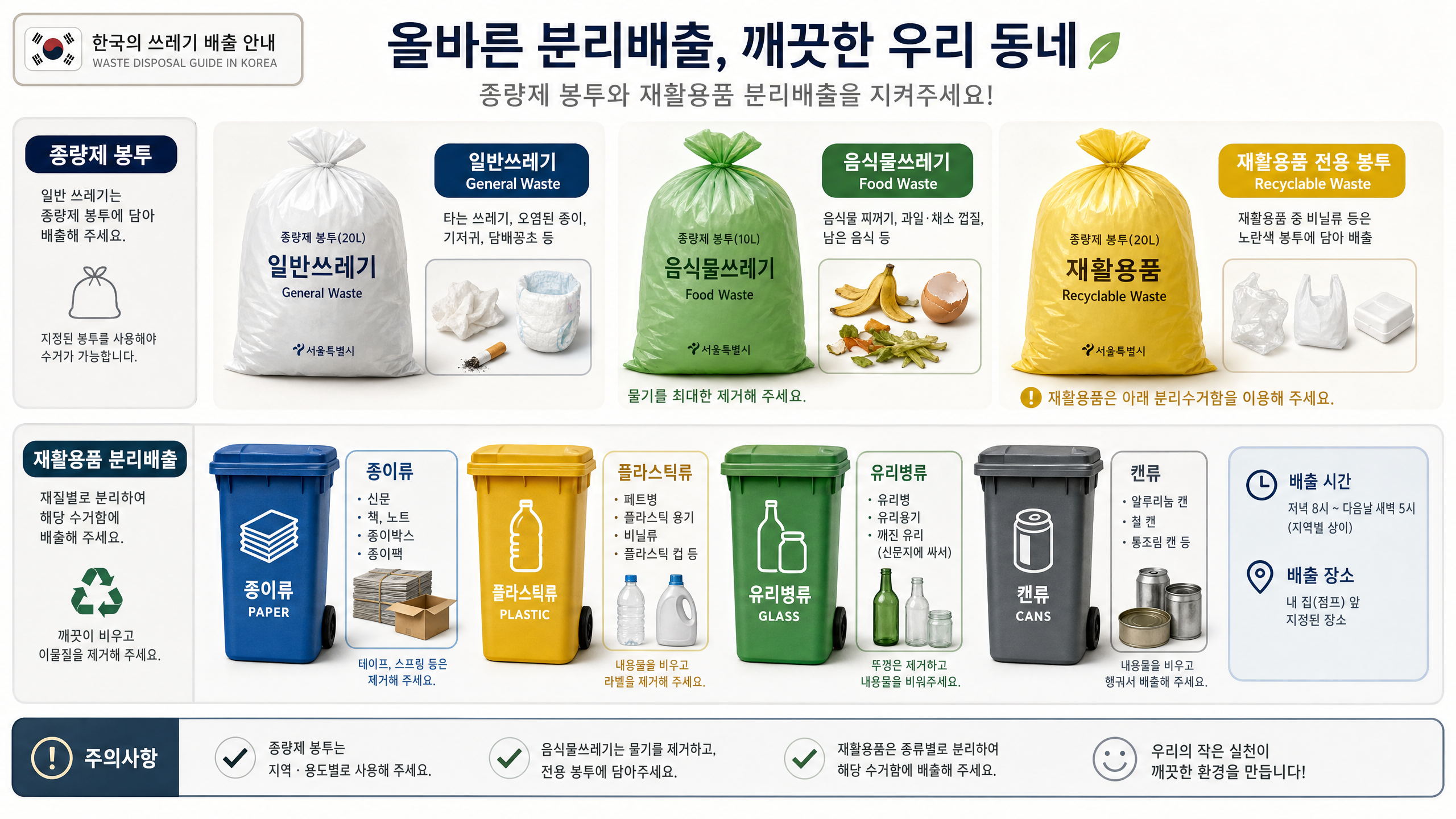
General Waste (종량제 봉투 – Jongnyangje Bongtu)
General waste, or non-recyclable trash, must be disposed of in designated standard garbage bags (종량제 봉투 – Jongnyangje Bongtu). These bags come in different sizes (e.g., 10L, 20L, 50L) and can be purchased at convenience stores, supermarkets, and some hardware stores. The price of the bag includes the cost of waste collection and disposal.
•How to use: Place all non-recyclable items (e.g., ceramics, broken glass, dirty plastics, diapers, small broken items) into these bags.
•Disposal: Tie the bag securely and place it in the designated area (usually near your building or a community collection point) on specific collection days and times. These vary by district and building, so check with your landlord or building management.
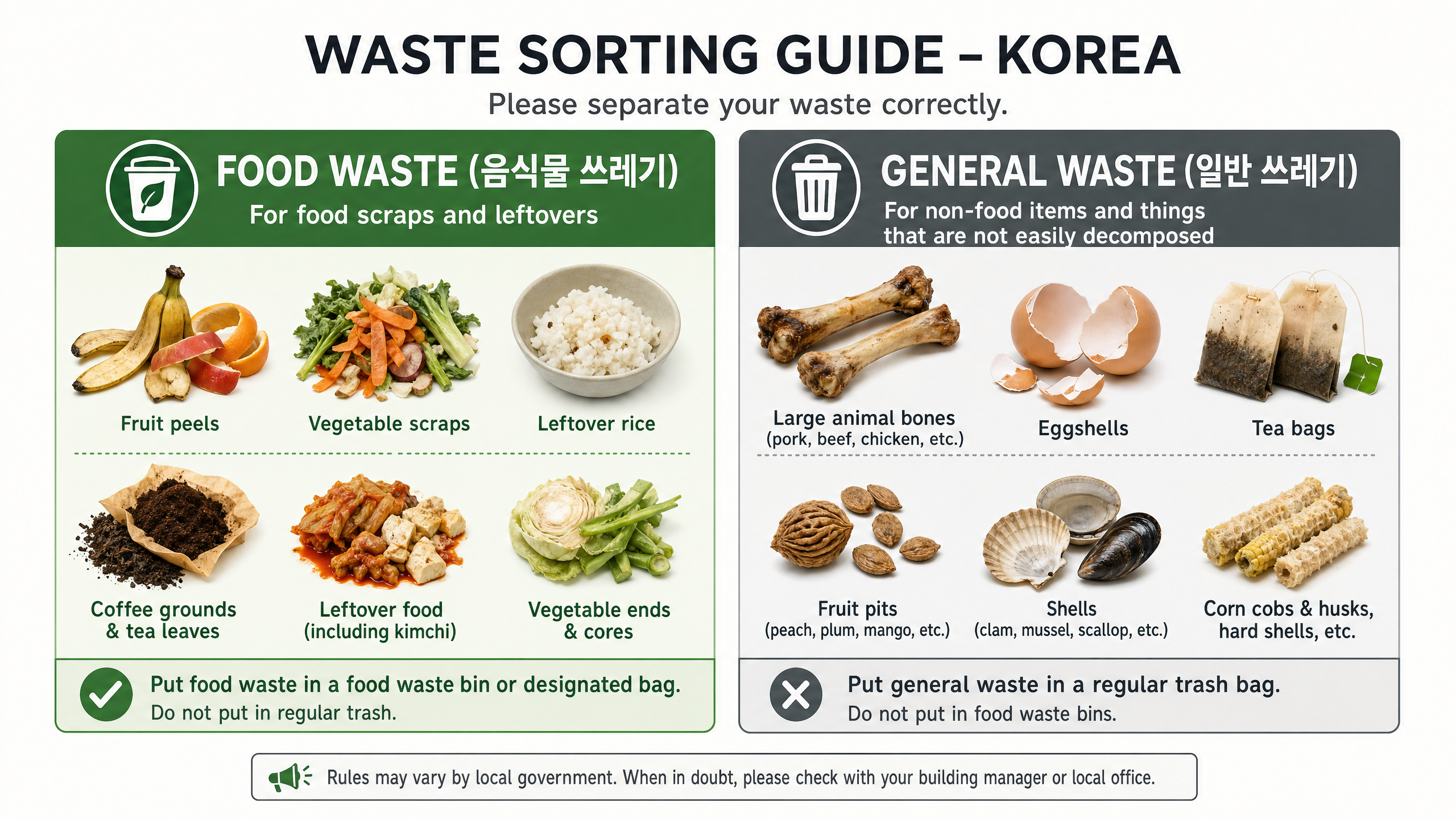
Food Waste (음식물 쓰레기 – Eumsikmul Sseuregi)
Food waste is collected separately and often requires special food waste bags (음식물 쓰레기 봉투 – Eumsikmul Sseuregi Bongtu), which are usually yellow or pink and smaller than general waste bags. In some areas, you might use a designated food waste bin with a special RFID card.
•What goes in: All organic food scraps, including fruits, vegetables, meat, fish, and grains. Make sure to remove any non-food items like bones, shells, and tea bags.
•What doesn’t: Large bones (chicken, beef), shellfish shells (oyster, clam), eggshells, tea bags, fruit pits (peach, avocado), and hard nut shells are generally considered general waste.
•Disposal: Similar to general waste, dispose of food waste bags in designated areas on specific collection days.
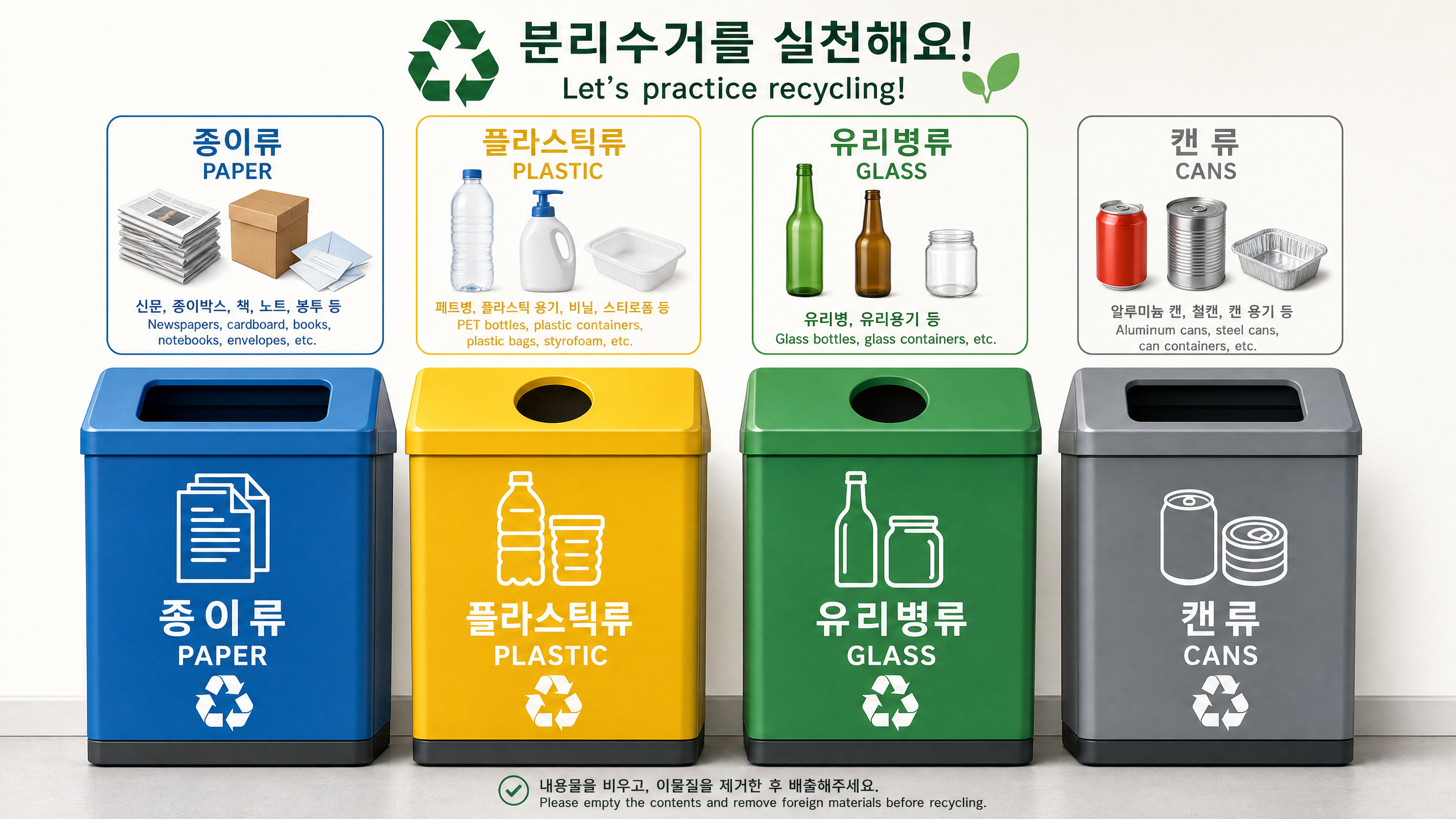
Recycling (재활용 – Jaehwalyong)
Recycling is a big part of Korean waste management. Items are typically separated into categories:
•Paper (종이): Newspapers, magazines, cardboard boxes (flattened), paper cups (rinsed). Remove any plastic coatings or tape.
•Plastics (플라스틱): Plastic bottles, containers, trays. Rinse them clean and remove labels/caps.
•Glass (유리): Glass bottles and jars. Rinse clean and remove caps. Separate by color if required.
•Cans/Metals (캔/고철): Aluminum cans, steel cans, metal scraps. Rinse clean.
•Vinyl/Plastic Bags (비닐류): Clean plastic bags, plastic wrap, snack bags. Often collected separately from hard plastics.
•Disposal: Each category has a designated bin or collection point. Collection days vary, so check local guidelines.
Large Item Disposal (대형 폐기물 – Daehyeong Pyegimul)
For large items like furniture, electronics, or appliances, you cannot simply throw them out. You need to purchase a large waste sticker (대형 폐기물 스티커) from your local district office (주민센터 – Jumin Center) or online. Attach the sticker to the item and place it in a designated area for collection.
Tips for Success
•Check Local Guidelines: Rules can vary slightly by district (gu) and even by apartment complex. Always check with your landlord, building management, or local district office for specific schedules and requirements.
•Use Apps: Some cities offer apps that provide waste disposal schedules and information in English.
•When in Doubt: If you’re unsure, it’s safer to categorize an item as general waste rather than contaminating recycling.
Mastering waste disposal is a small but significant step towards a comfortable and responsible life in Korea. staykorea.org is committed to providing you with all the information you need to settle in smoothly. For more tips on living in Korea, visit our website!
[Go to staykorea.org]